

Festivals

Four days, three stages, one system.

Per-day tickets, live shared inventory, and door operations that keep pace with the crowd.
Get started
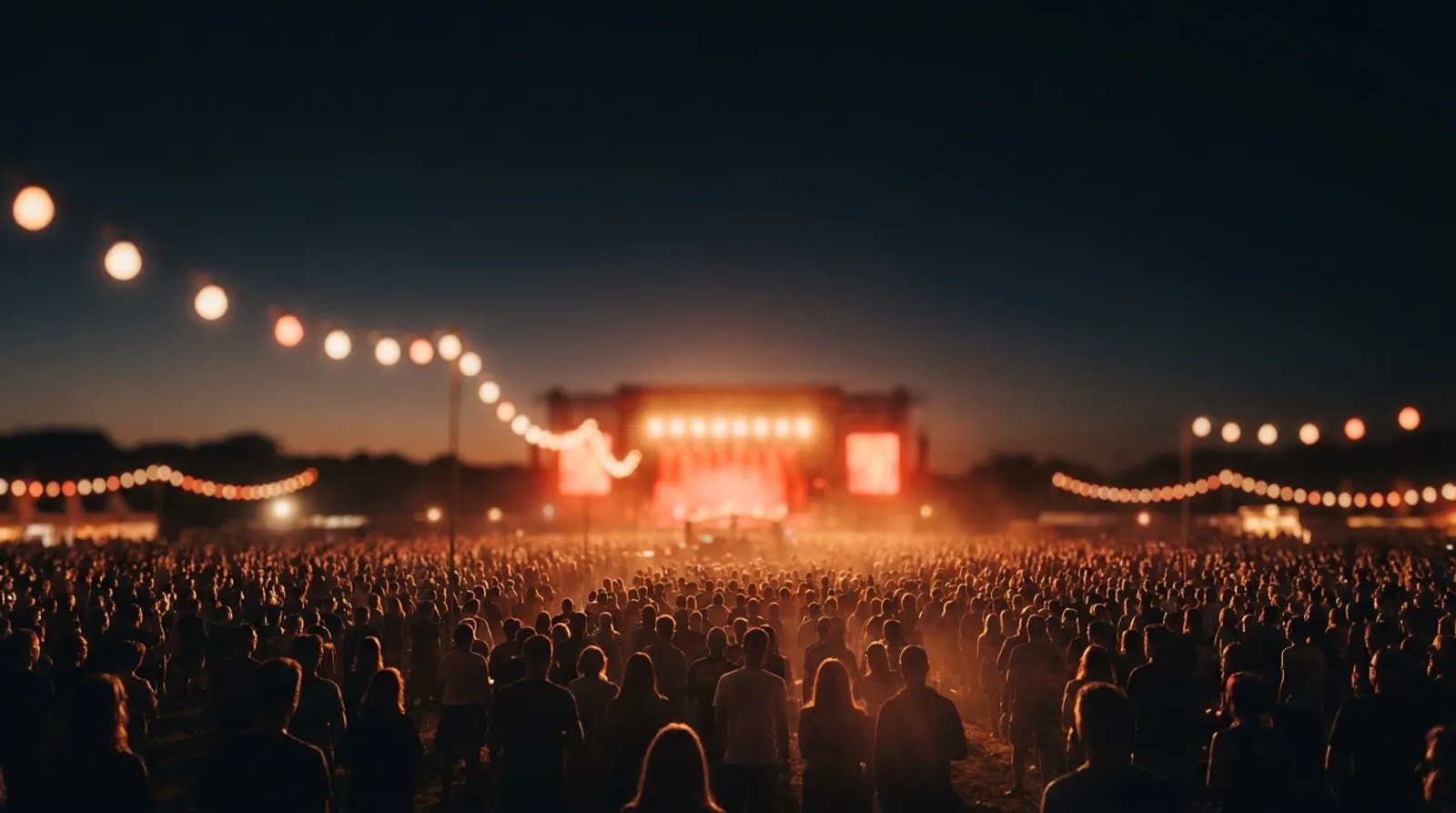
A festival crowd at dusk facing a warmly lit main stage under strings of lights

The ticketing engine for multi-day events.

Every day is its own on-sale.

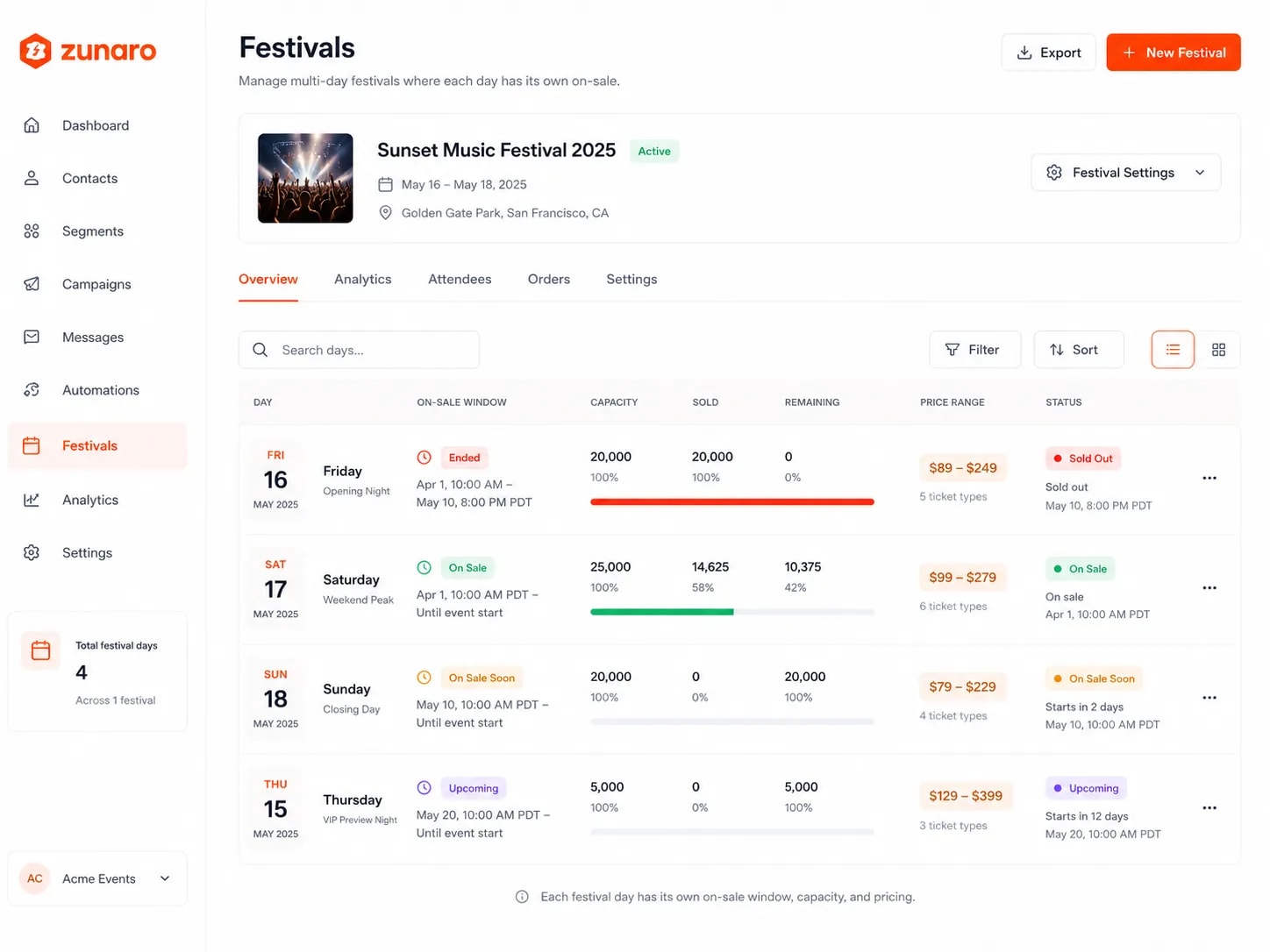
Each festival day is a performance with its own capacity, prices, and on-sale window—Friday can sell out while Sunday keeps moving, all inside one event.
Festivals
One multi-day festival with every day run as its own on-sale — the festival's dates, park location and active status above a searchable, sortable table of its days, each row naming the day and what it is, opening night, weekend peak, closing day or a VIP preview, with its own on-sale window, capacity, tickets sold and remaining as counts and a progress bar, its own price range across its own number of ticket types, and its own status: opening night ended and sold out, the Saturday still on sale a little over halfway, the closing day yet to open, and the preview night upcoming — under a note that each festival day carries its own on-sale window, capacity and pricing

Inventory that never lies.

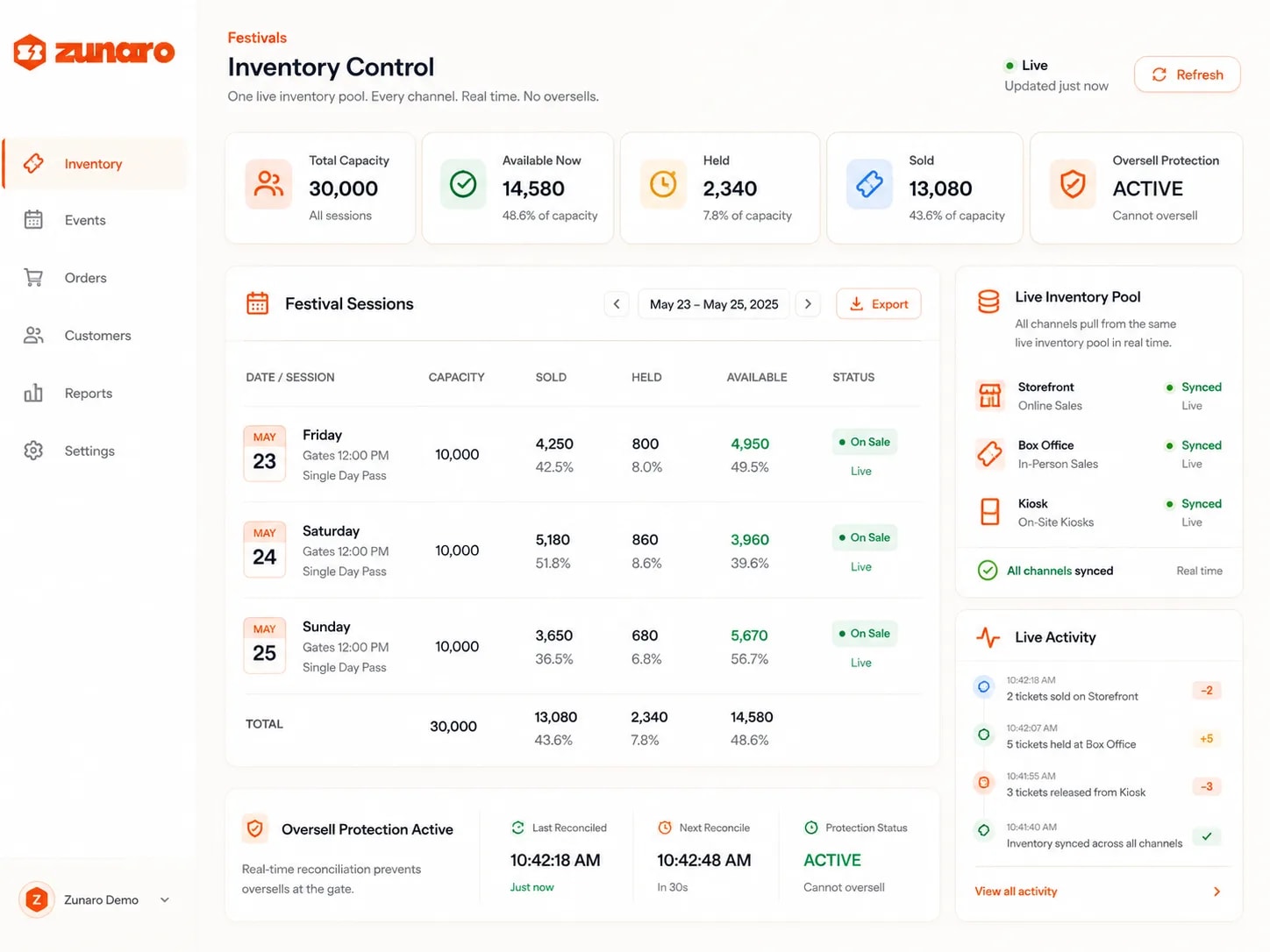
Storefront, box office, and kiosk sell from one live pool with availability pushed to every surface in real time—a surge at the gate can't oversell the lawn.
Festivals
One live inventory pool shared by every sales channel — total capacity across all sessions split into what is available now, what is held and what has sold, with oversell protection active; each festival day listed with its gates time, capacity, and its own sold, held and available counts as numbers and shares, totalling to the same figures as the summary above; a panel confirming storefront, box office and on-site kiosks are each synced live to that one pool; a running activity feed of tickets sold on the storefront, held at the box office and released from a kiosk as they happen; and a reconciliation strip showing the last and next reconcile moments seconds apart, keeping the gate from overselling

Gates that keep moving.

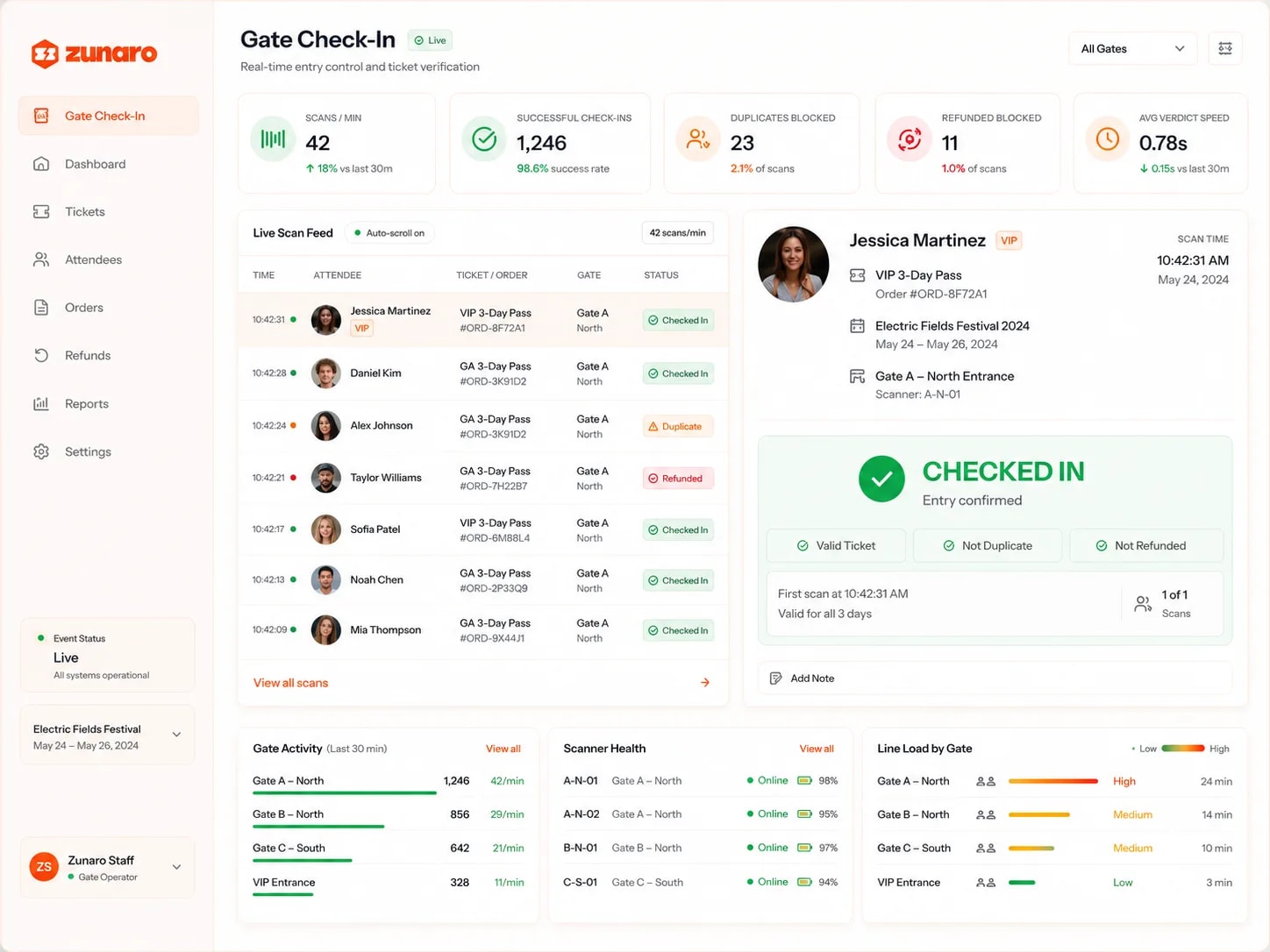
Camera scanning on phones, wedge scanners at high-volume entrances, sub-second verdicts—duplicates and refunds bounce with the guest's name and status in front of staff.
Festivals
Live entry control at a festival gate — scans a minute, successful check-ins and their success rate, duplicates and refunded tickets turned away, and an average verdict speed under a second; a live scan feed naming each guest with their pass, order, gate and verdict as it lands, most checked in but one bounced as a duplicate of an order already scanned and another as refunded; the guest just scanned shown large with their photo, pass, order, festival, gate and scanner, the entry confirmed against three checks — valid ticket, not a duplicate, not refunded — with the exact first-scan time and how many of their scans have been used; and below, per-gate throughput, the health of each scanner and how long the queue is running at every entrance

Campaigns timed to every day.

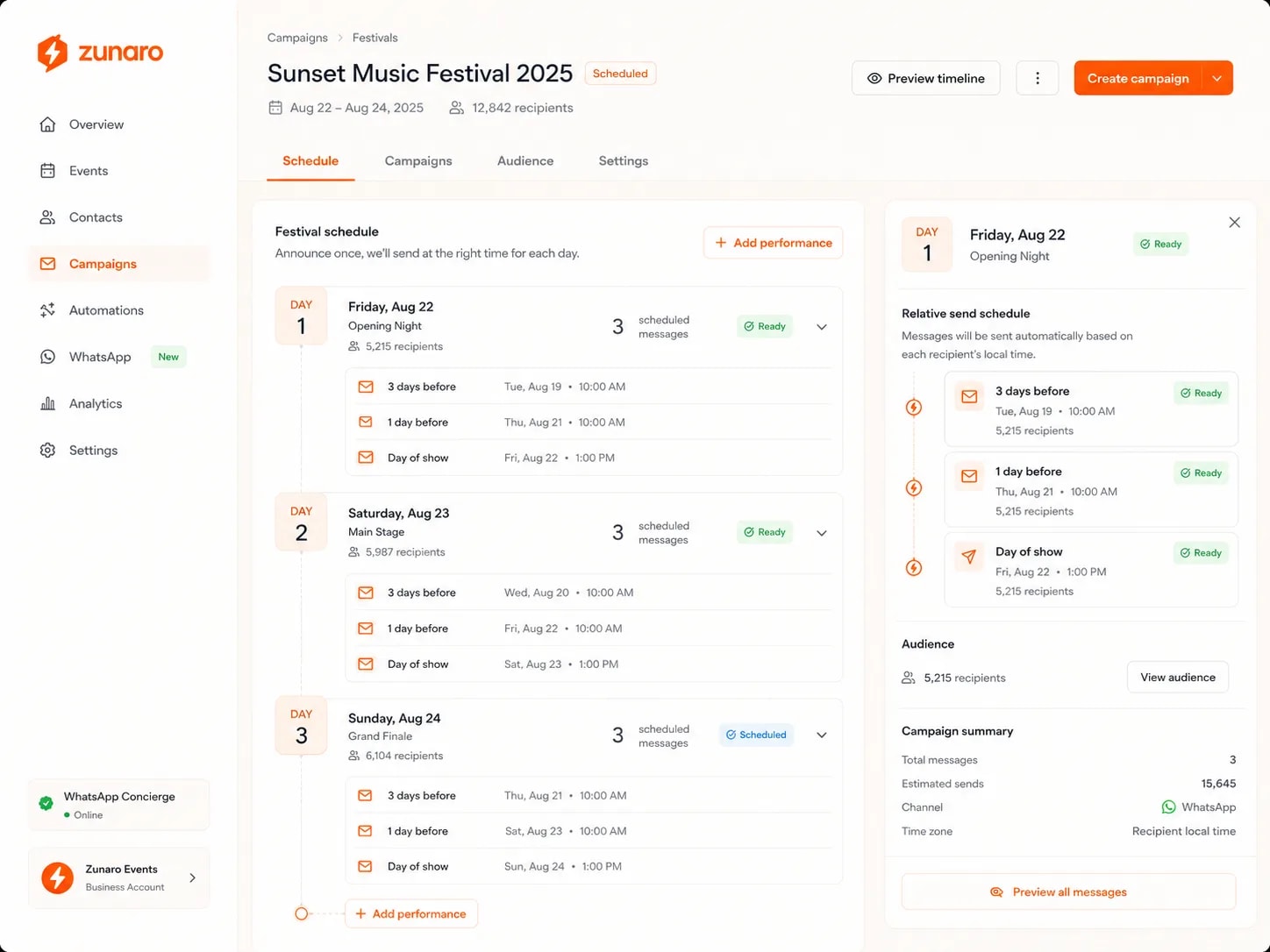
Announce once, then let relative scheduling email ticket holders three days before each performance—every day's crowd gets the right message without manual sends.
Festivals
One festival campaign scheduled once and timed to each day — a schedule listing every performance of a multi-day festival, opening night, main stage and grand finale, each with its own recipient count and three messages queued against it: one three days before, one the day before and one on the day of the show, every date resolved from that day's own date so no send is picked by hand; and the selected day open alongside, confirming the same relative send schedule with each message's date, time and audience, that sends follow each recipient's local time, and a summary of how many messages the campaign holds, how many sends they add up to, and which channel they go out on

Start with 14 days of Premium, for free.